This striking set of three model 2010 wall lamps by Rolf Krüger and Dieter Witte for Staff Leuchten is a beautiful example of mid-century German lighting design. The lamps embody the sculptural experimentation and refined minimalism that defined the era.
Their design is remarkably clever: each lamp combines a softly curved metal shade with a geometric diamond-shaped diffuser behind it, creating a composition that feels both architectural and organic. When illuminated, the light escapes from the top and bottom, projecting dramatic triangular beams onto the wall. This interplay of direct form and indirect light transforms the lamps into sculptural objects as much as functional lighting.
The contrast between the dark lacquered exterior and the glowing white interior enhances their visual depth, while the compact dimensions allow the lamps to work beautifully alone or in rhythmic arrangements across a wall. The modular quality of the design reflects the innovative spirit of German mid-century modernism, where lighting became an integral part of interior architecture rather than simply a practical necessity.
This striking set of three model 2010 wall lamps by Rolf Krüger and Dieter Witte for Staff Leuchten is a beautiful example of mid-century German lighting design. The lamps embody the sculptural experimentation and refined minimalism that defined the era.
Their design is remarkably clever: each lamp combines a softly curved metal shade with a geometric diamond-shaped diffuser behind it, creating a composition that feels both architectural and organic. When illuminated, the light escapes from the top and bottom, projecting dramatic triangular beams onto the wall. This interplay of direct form and indirect light transforms the lamps into sculptural objects as much as functional lighting.
The contrast between the dark lacquered exterior and the glowing white interior enhances their visual depth, while the compact dimensions allow the lamps to work beautifully alone or in rhythmic arrangements across a wall. The modular quality of the design reflects the innovative spirit of German mid-century modernism, where lighting became an integral part of interior architecture rather than simply a practical necessity.


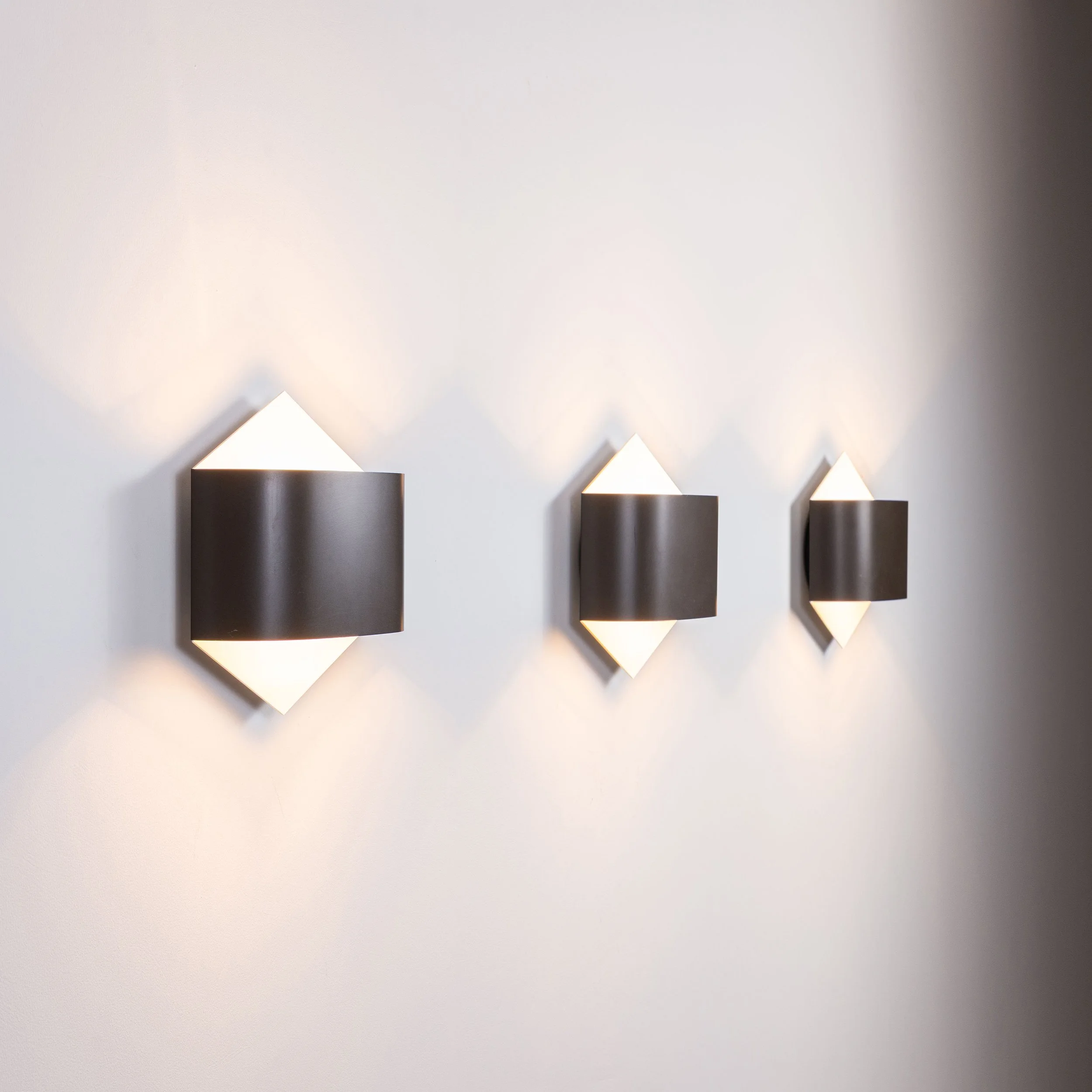 Image 1 of 10
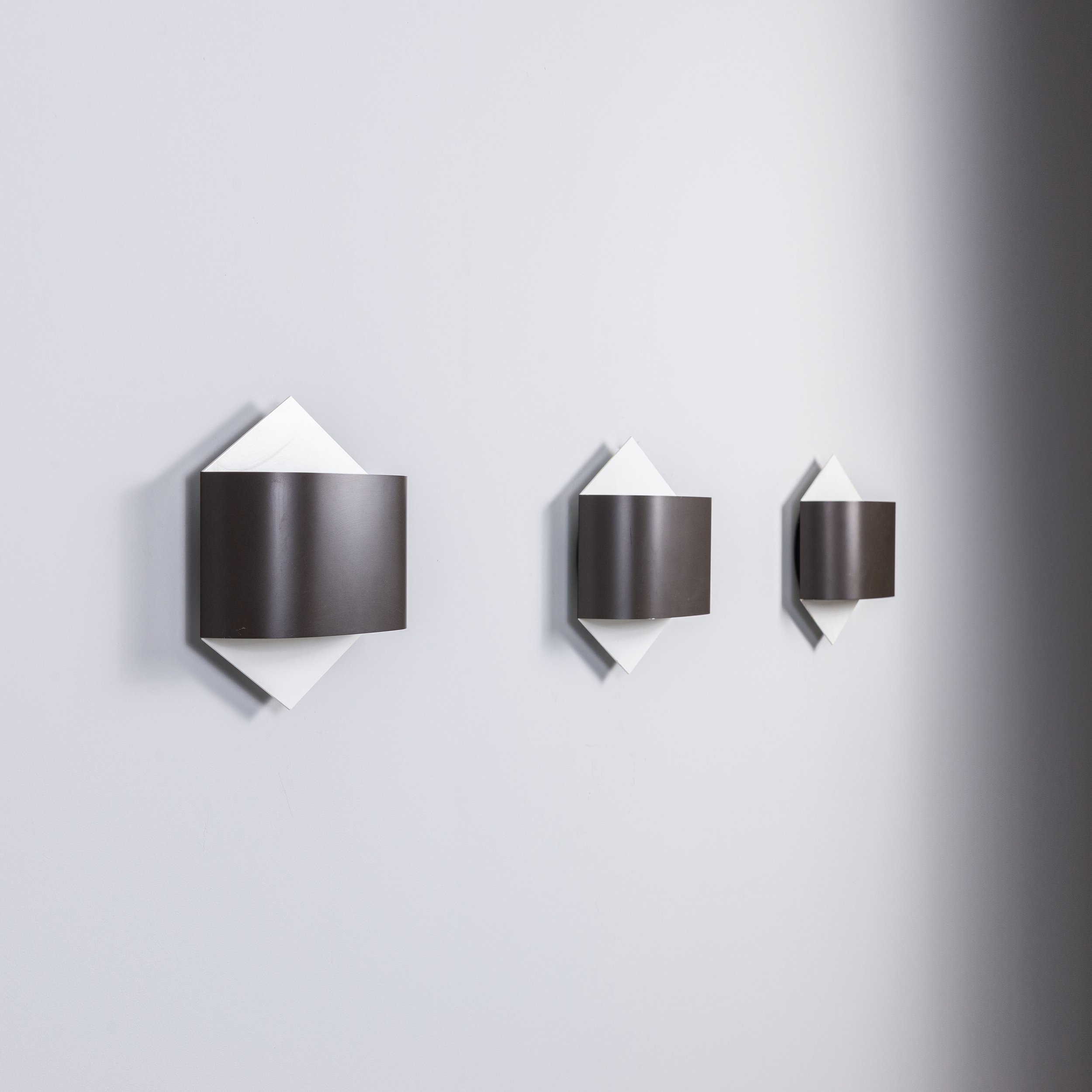 Image 2 of 10
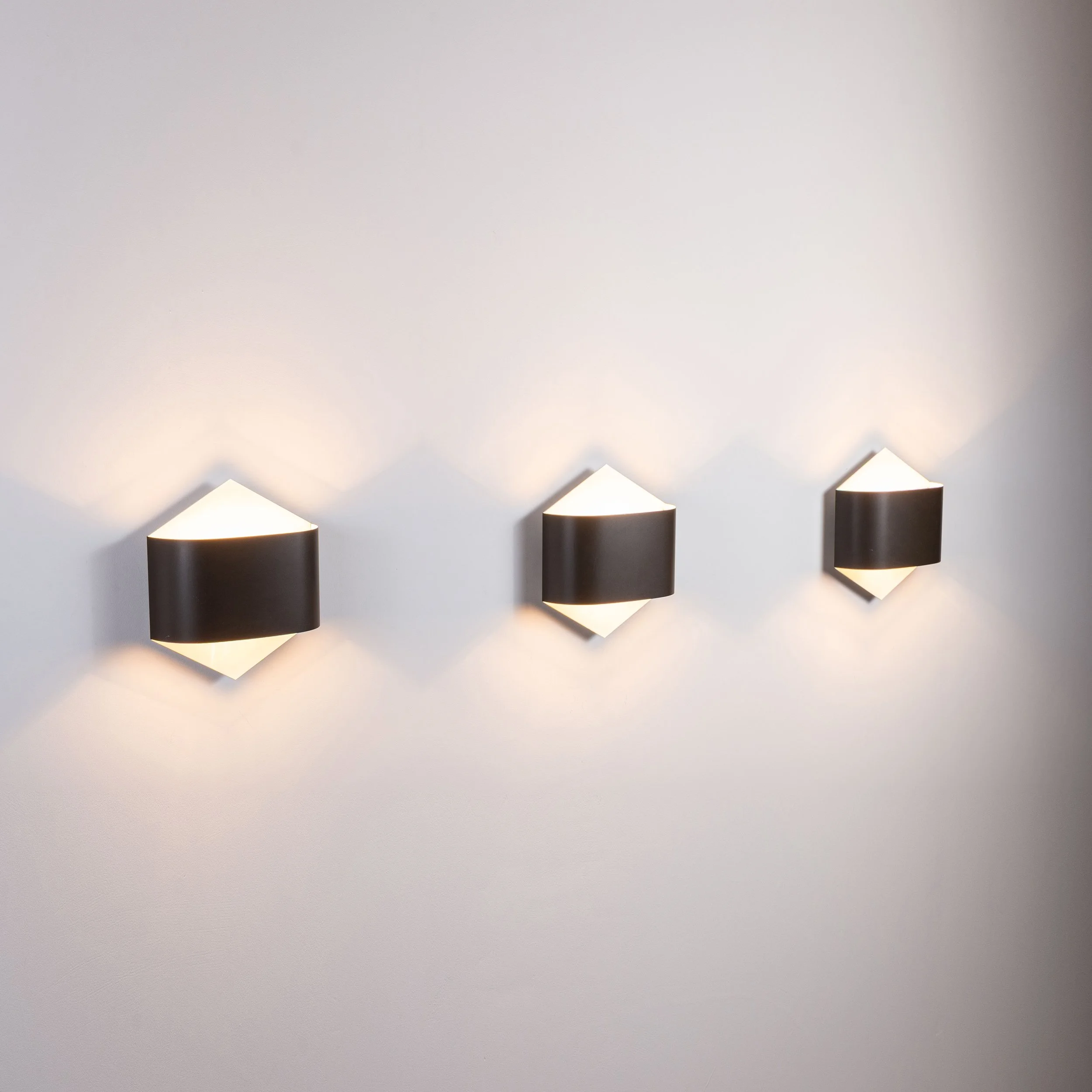 Image 3 of 10
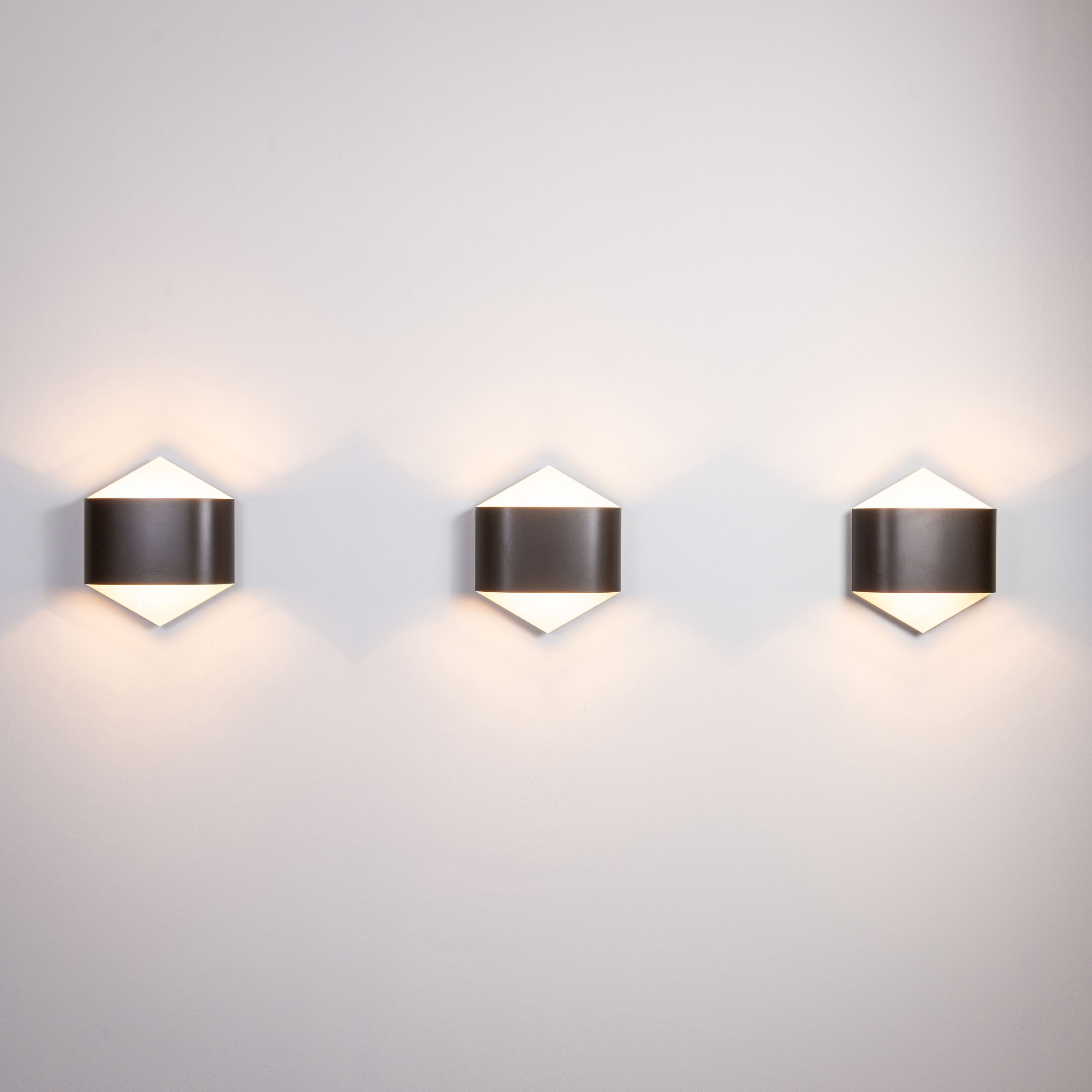 Image 4 of 10
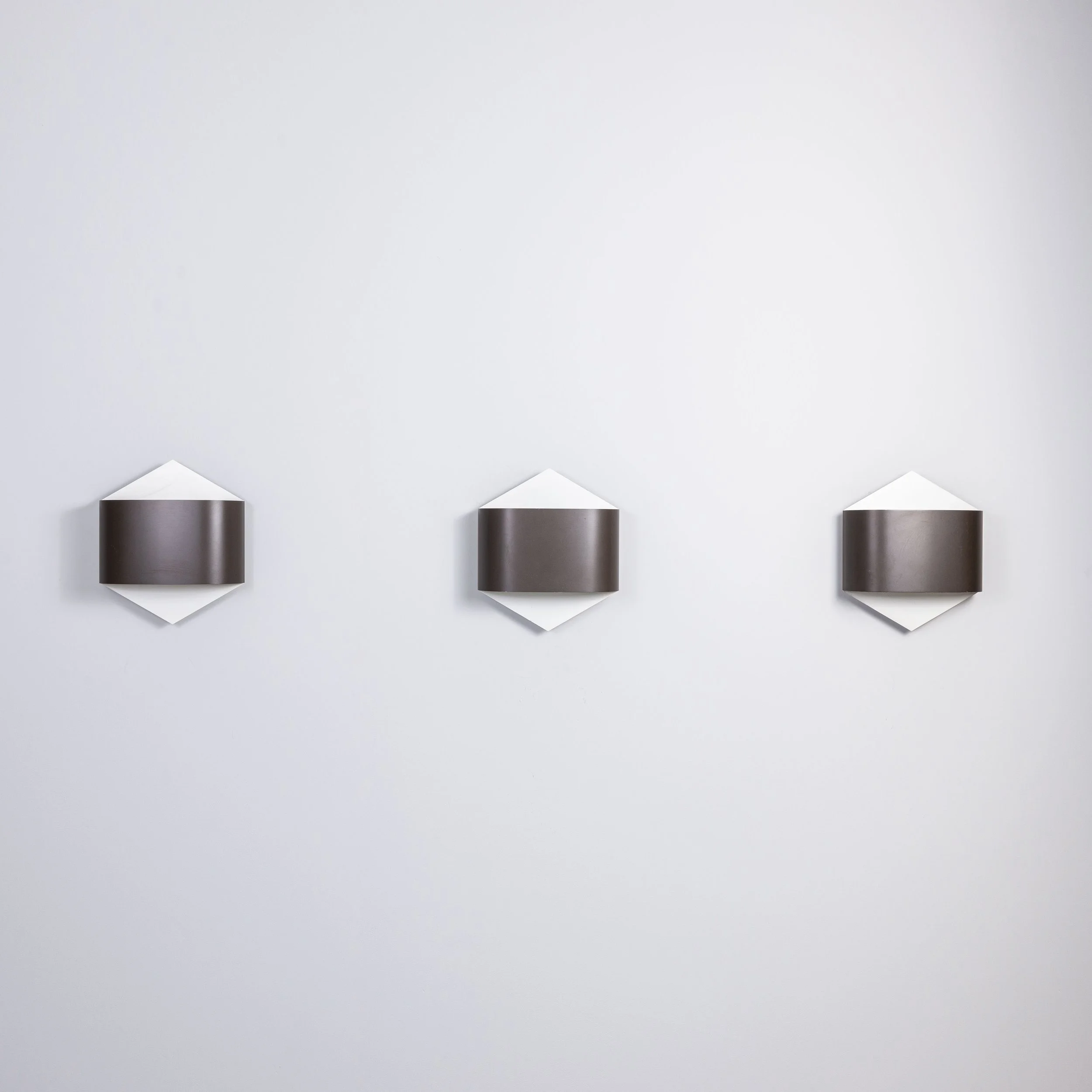 Image 5 of 10
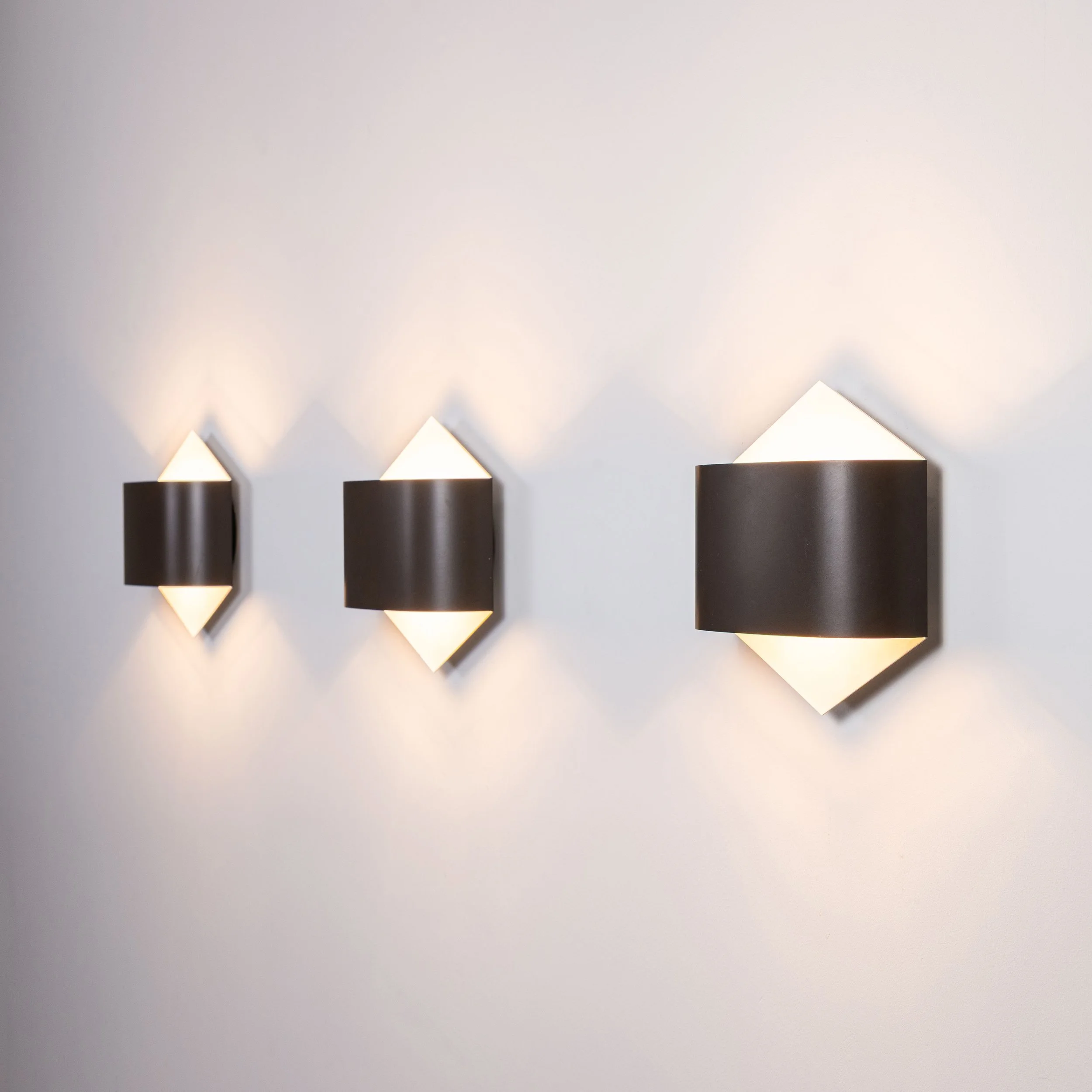 Image 6 of 10
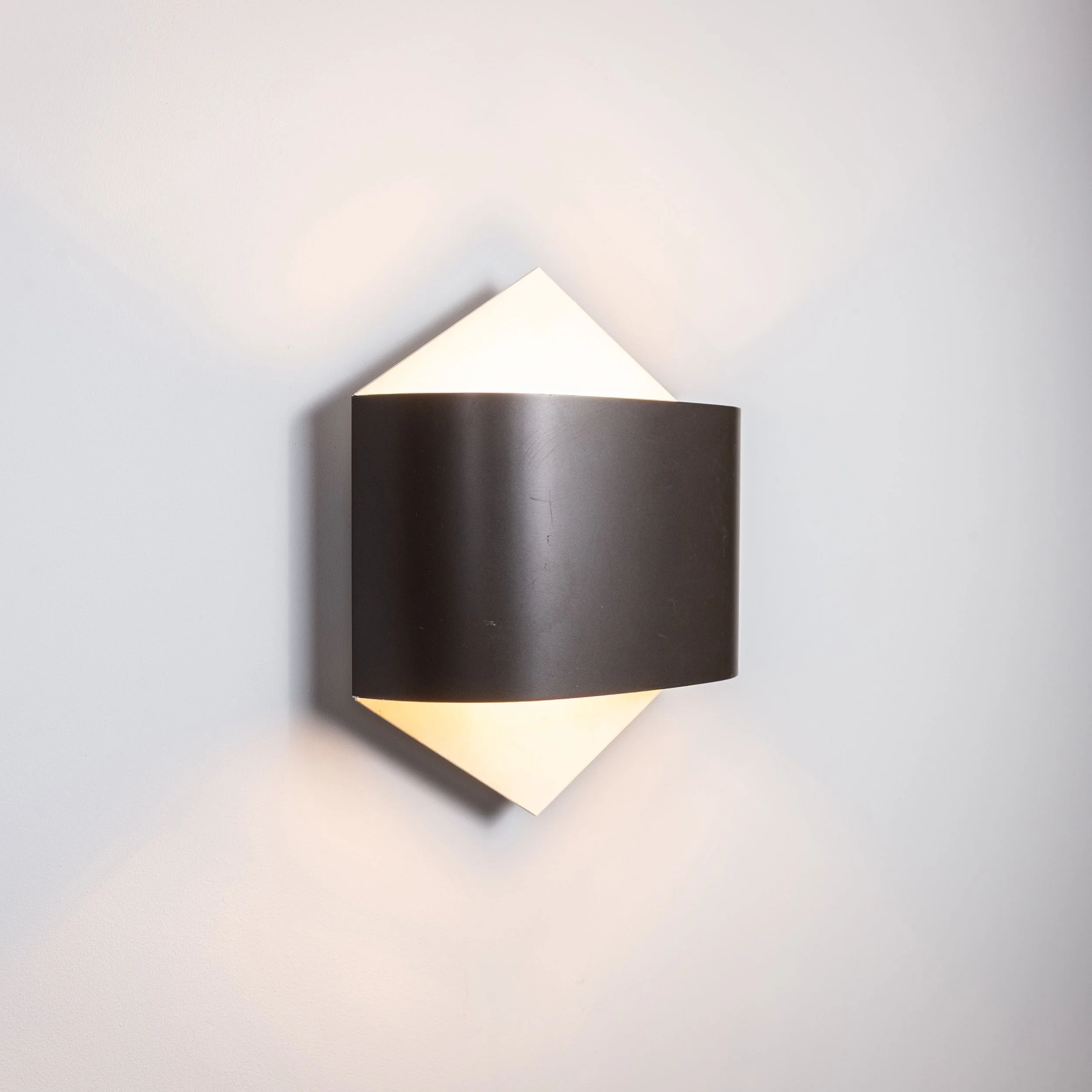 Image 7 of 10
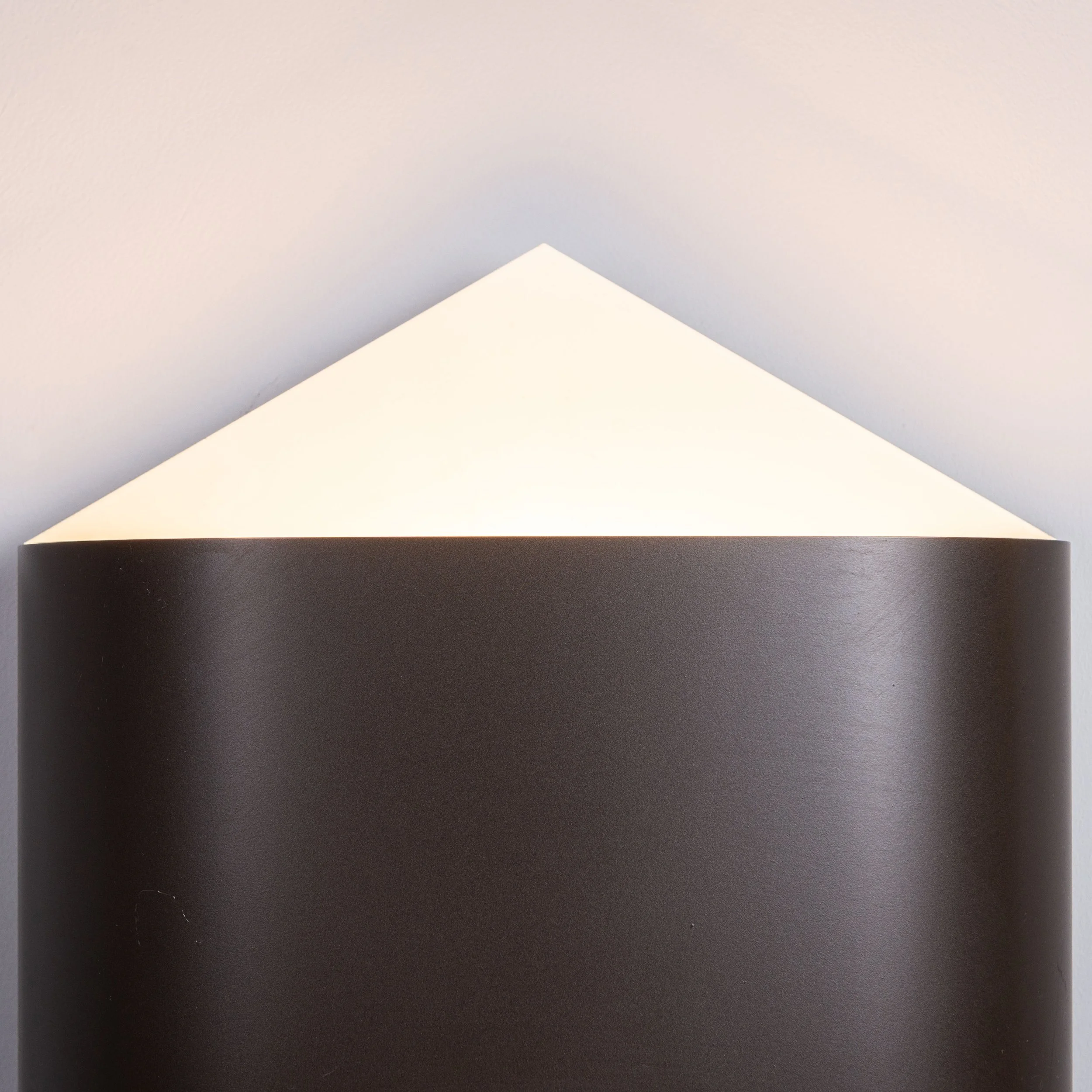 Image 8 of 10
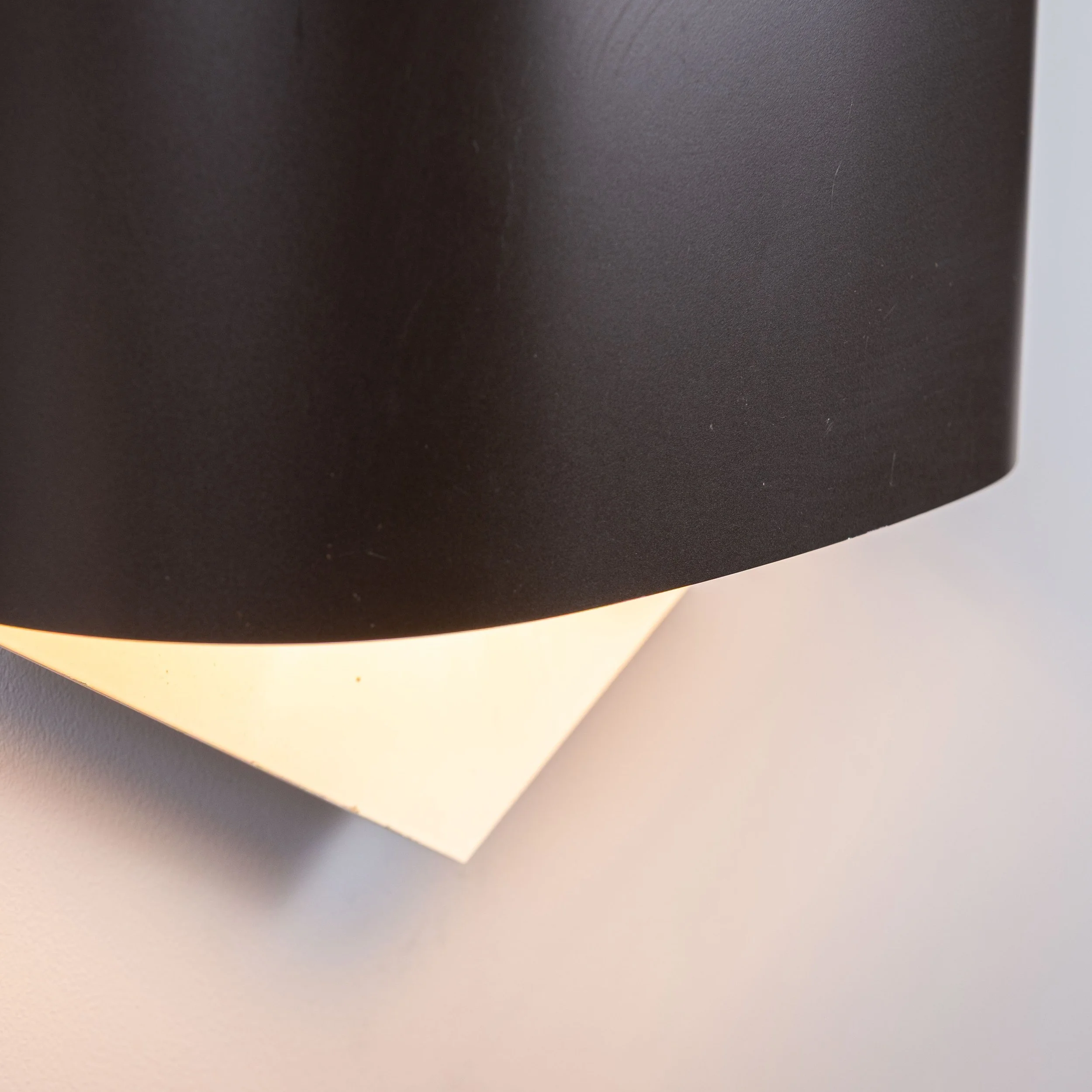 Image 9 of 10
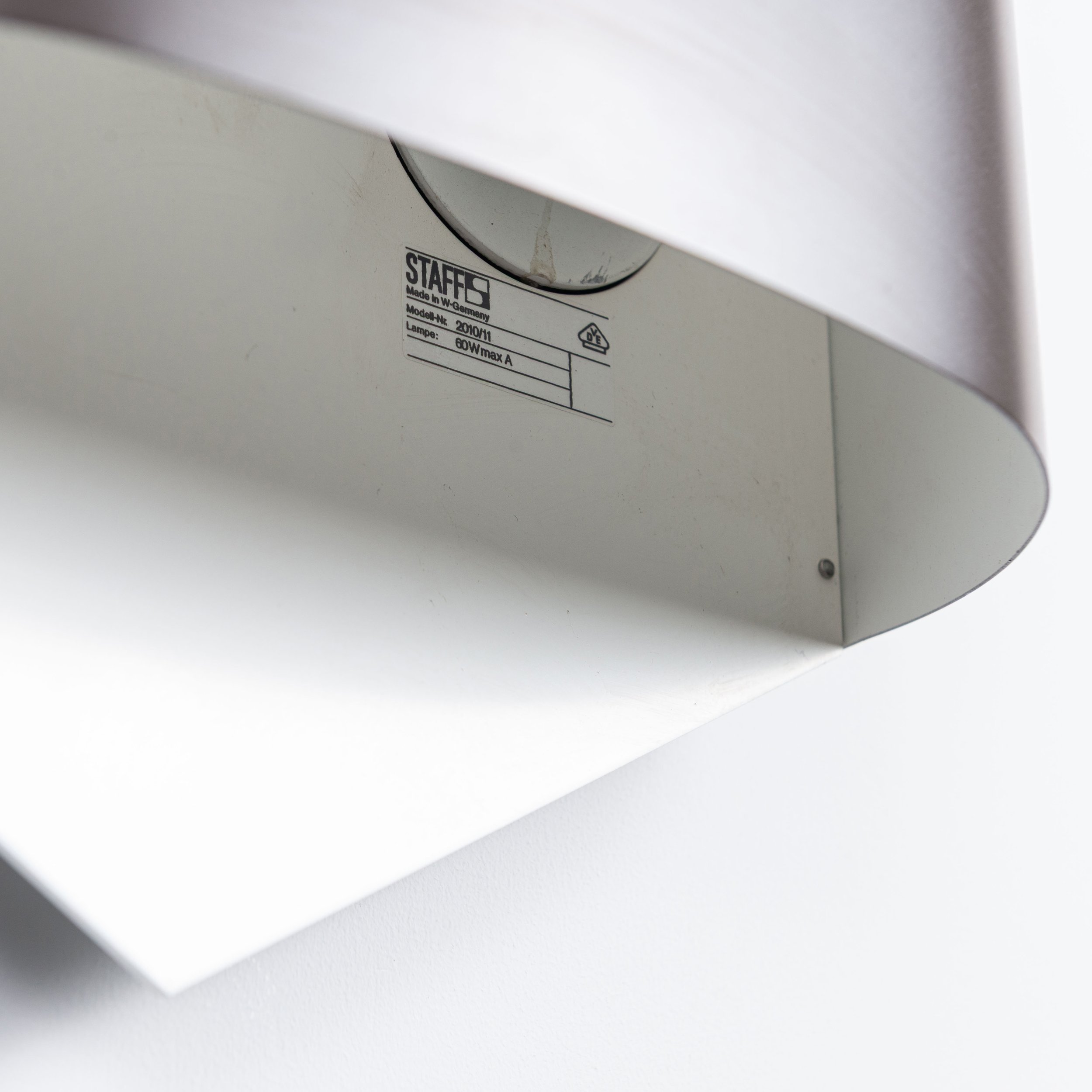 Image 10 of 10