Carved from a single block of aged wood, the torso stands with a quiet authority—its surface worn smooth in some places, rough and time-bitten in others. The grain runs like memory through its form, darkened by years, as if the tree it once was still whispers beneath the sculpture’s skin. There are no arms, no head—only the suggestion of a body, distilled to its essence.
Its abstraction is deliberate. The chest broadens gently, then narrows into a subtle waist, evoking strength without excess detail. The shoulders are rounded, softened by the hand of the maker, who chose restraint over realism. This is not a portrait of a man, but of presence—solid, grounded, and enduring.
Set upon a simple pedestal, the piece feels almost ceremonial, like an artifact recovered from another time. It invites stillness. Light grazes its surface and reveals faint tool marks, each one a trace of the sculptor’s decisions, pauses, and intentions. The wood’s deep, earthy tones anchor the form, giving it a weight that is both physical and symbolic.
There is something quietly human about it—its incompleteness makes it more universal. It does not demand recognition, only reflection. In its silence, it speaks of permanence, of the body reduced to form, and of the beauty that remains when everything unnecessary has been carved away.
Carved from a single block of aged wood, the torso stands with a quiet authority—its surface worn smooth in some places, rough and time-bitten in others. The grain runs like memory through its form, darkened by years, as if the tree it once was still whispers beneath the sculpture’s skin. There are no arms, no head—only the suggestion of a body, distilled to its essence.
Its abstraction is deliberate. The chest broadens gently, then narrows into a subtle waist, evoking strength without excess detail. The shoulders are rounded, softened by the hand of the maker, who chose restraint over realism. This is not a portrait of a man, but of presence—solid, grounded, and enduring.
Set upon a simple pedestal, the piece feels almost ceremonial, like an artifact recovered from another time. It invites stillness. Light grazes its surface and reveals faint tool marks, each one a trace of the sculptor’s decisions, pauses, and intentions. The wood’s deep, earthy tones anchor the form, giving it a weight that is both physical and symbolic.
There is something quietly human about it—its incompleteness makes it more universal. It does not demand recognition, only reflection. In its silence, it speaks of permanence, of the body reduced to form, and of the beauty that remains when everything unnecessary has been carved away.


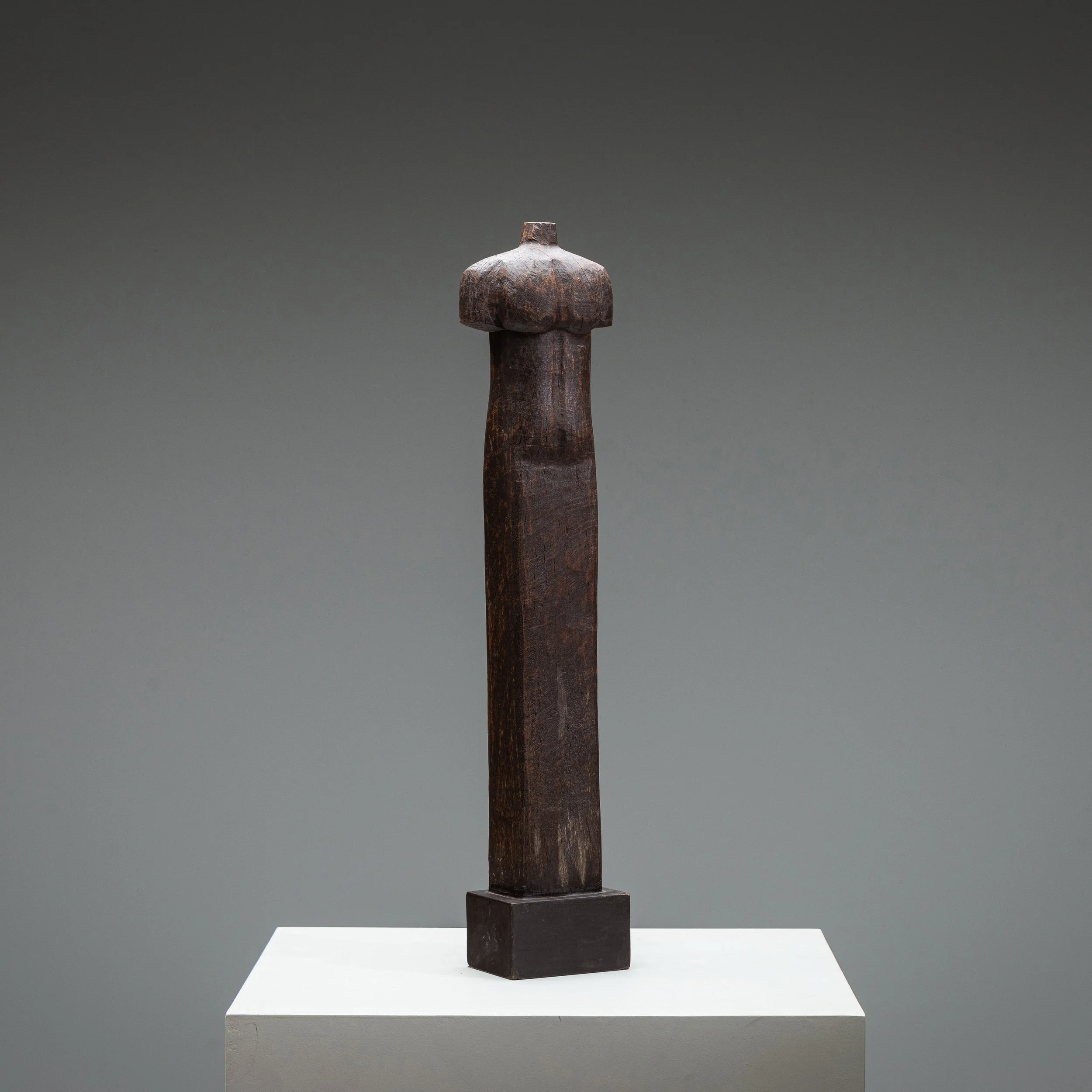 Image 1 of 12
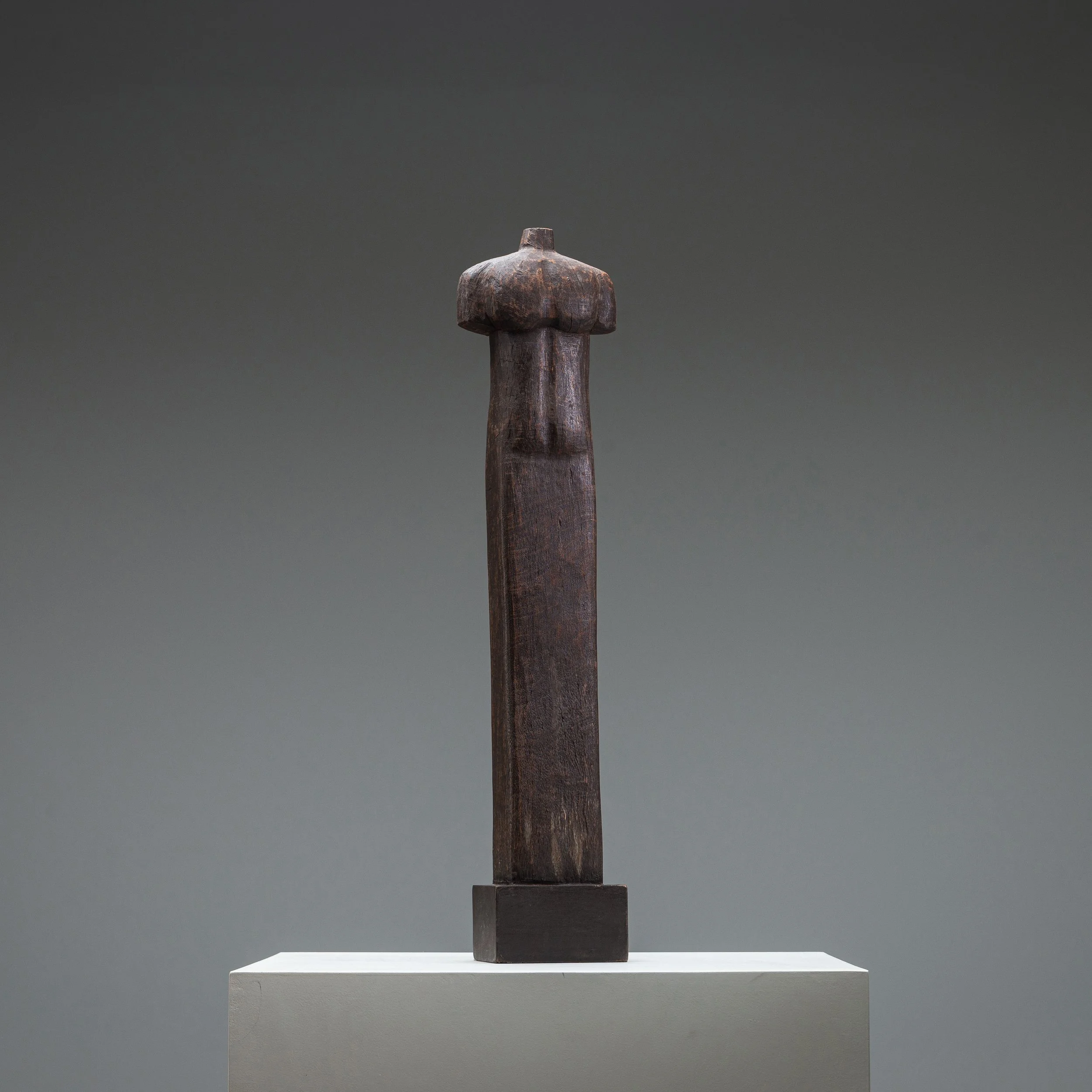 Image 2 of 12
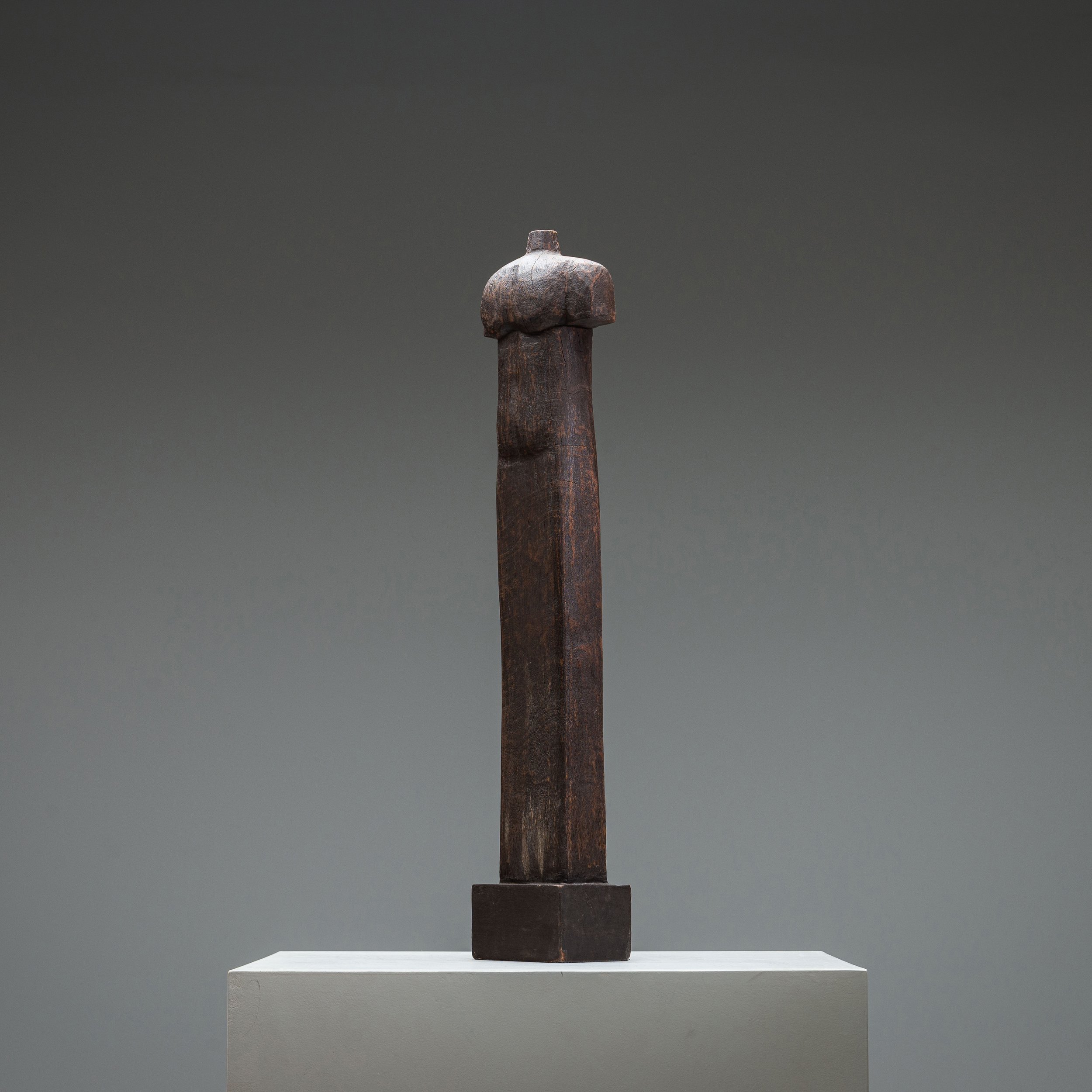 Image 3 of 12
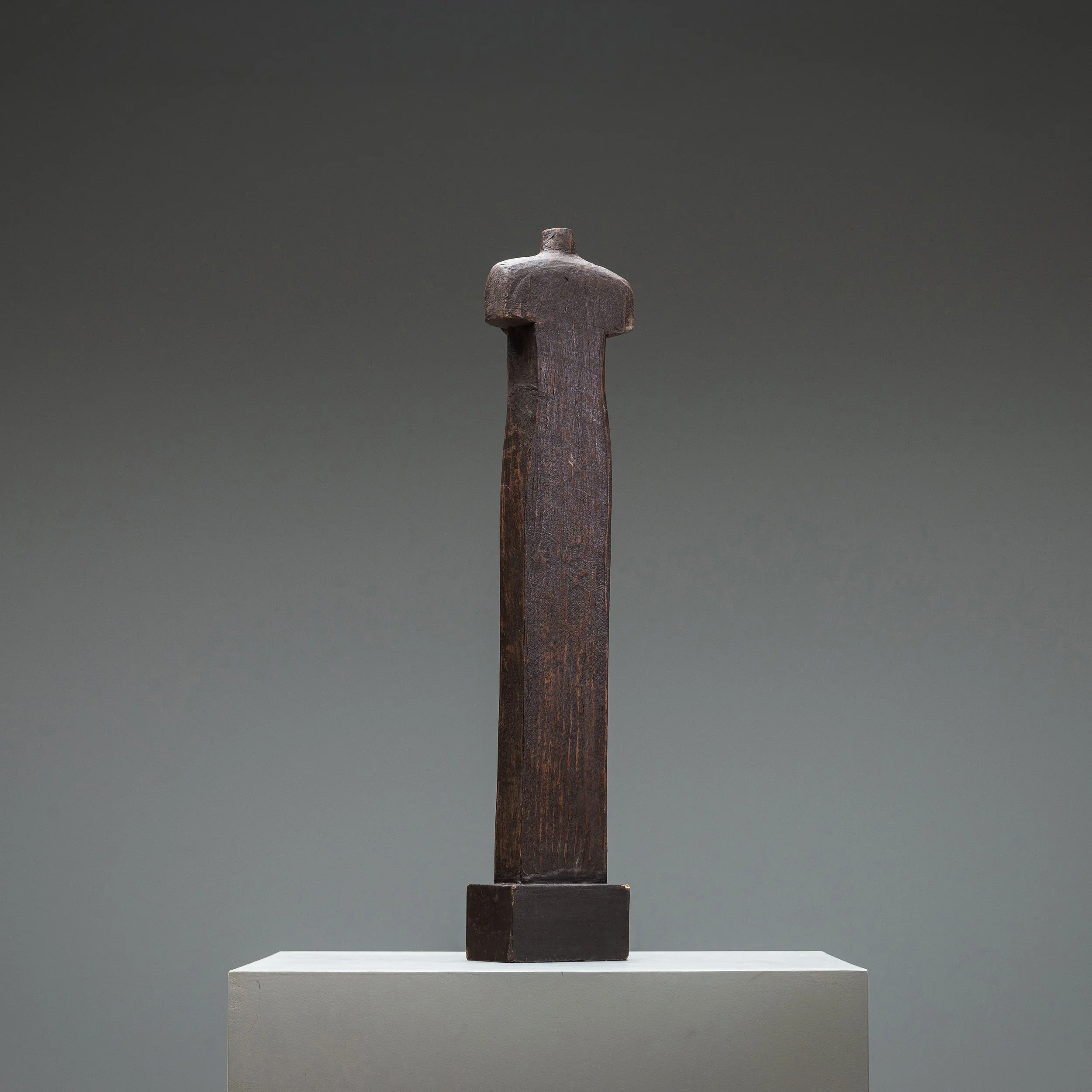 Image 4 of 12
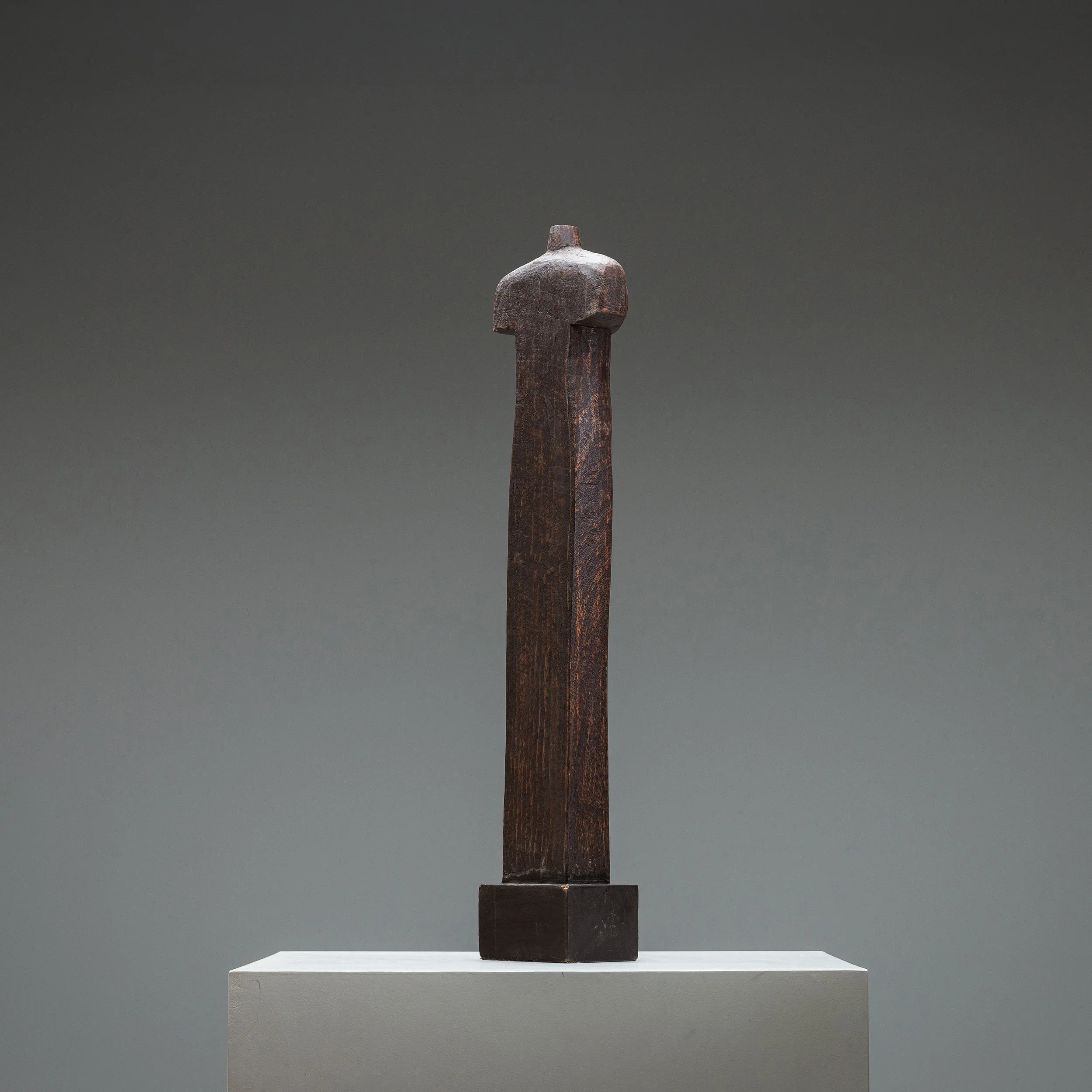 Image 5 of 12
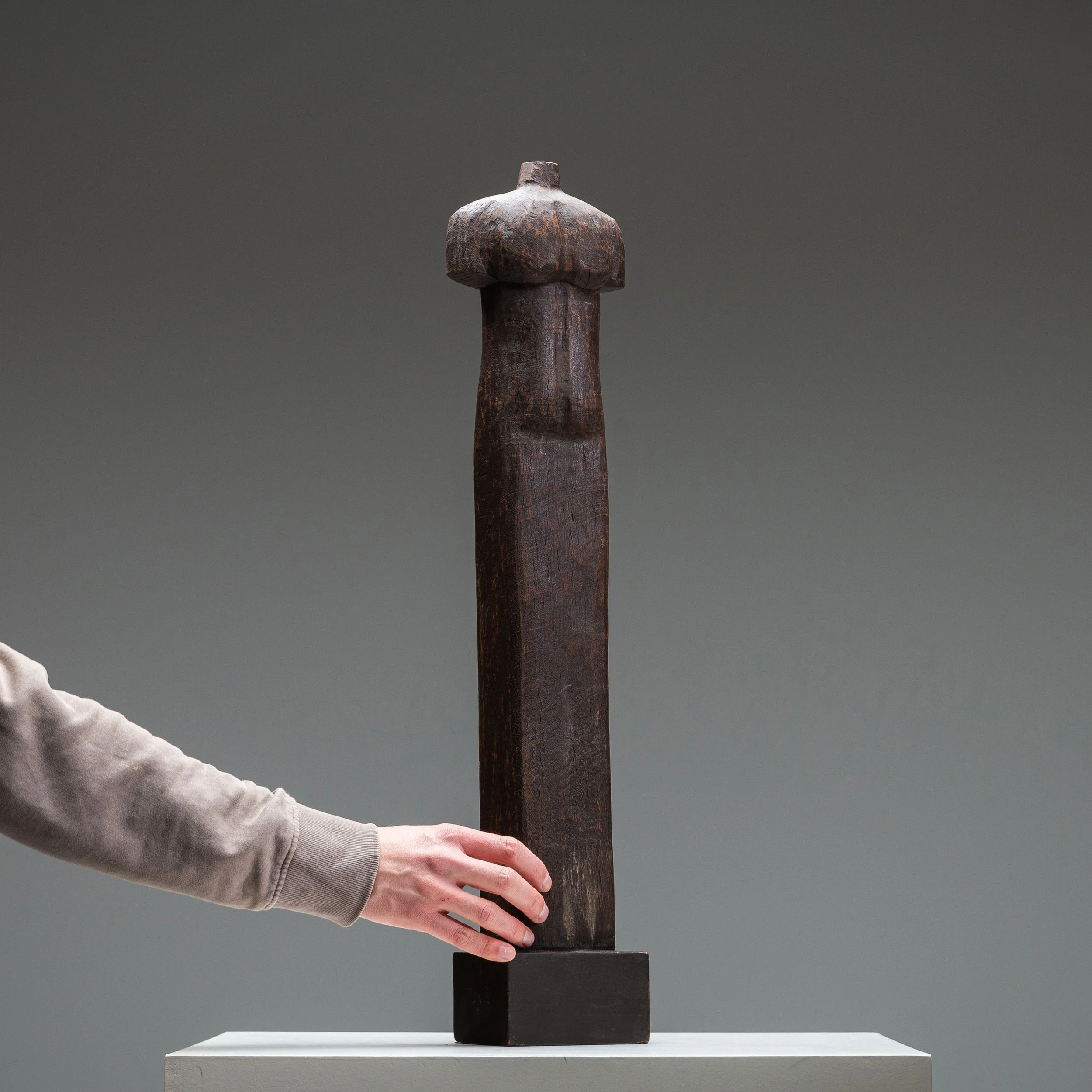 Image 6 of 12
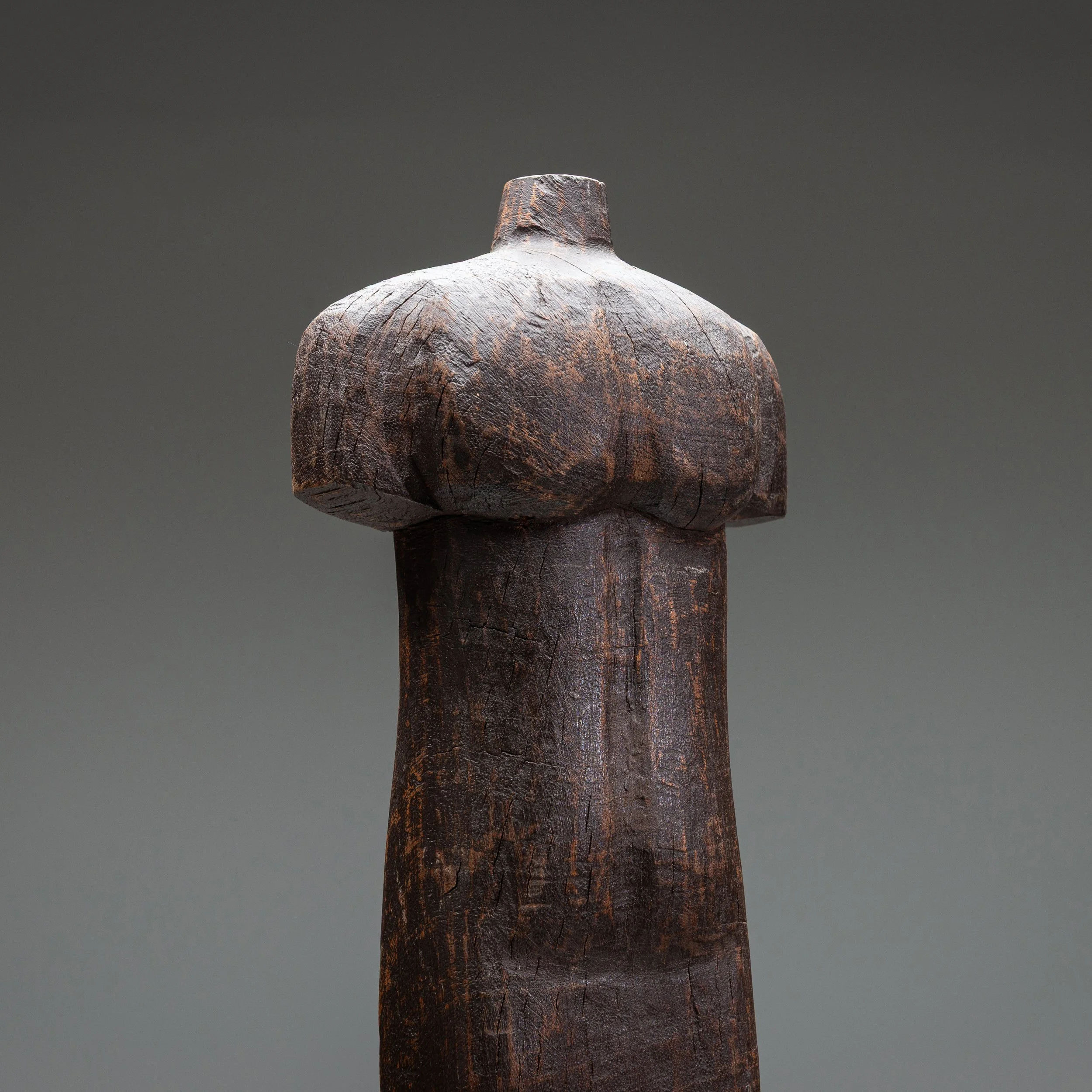 Image 7 of 12
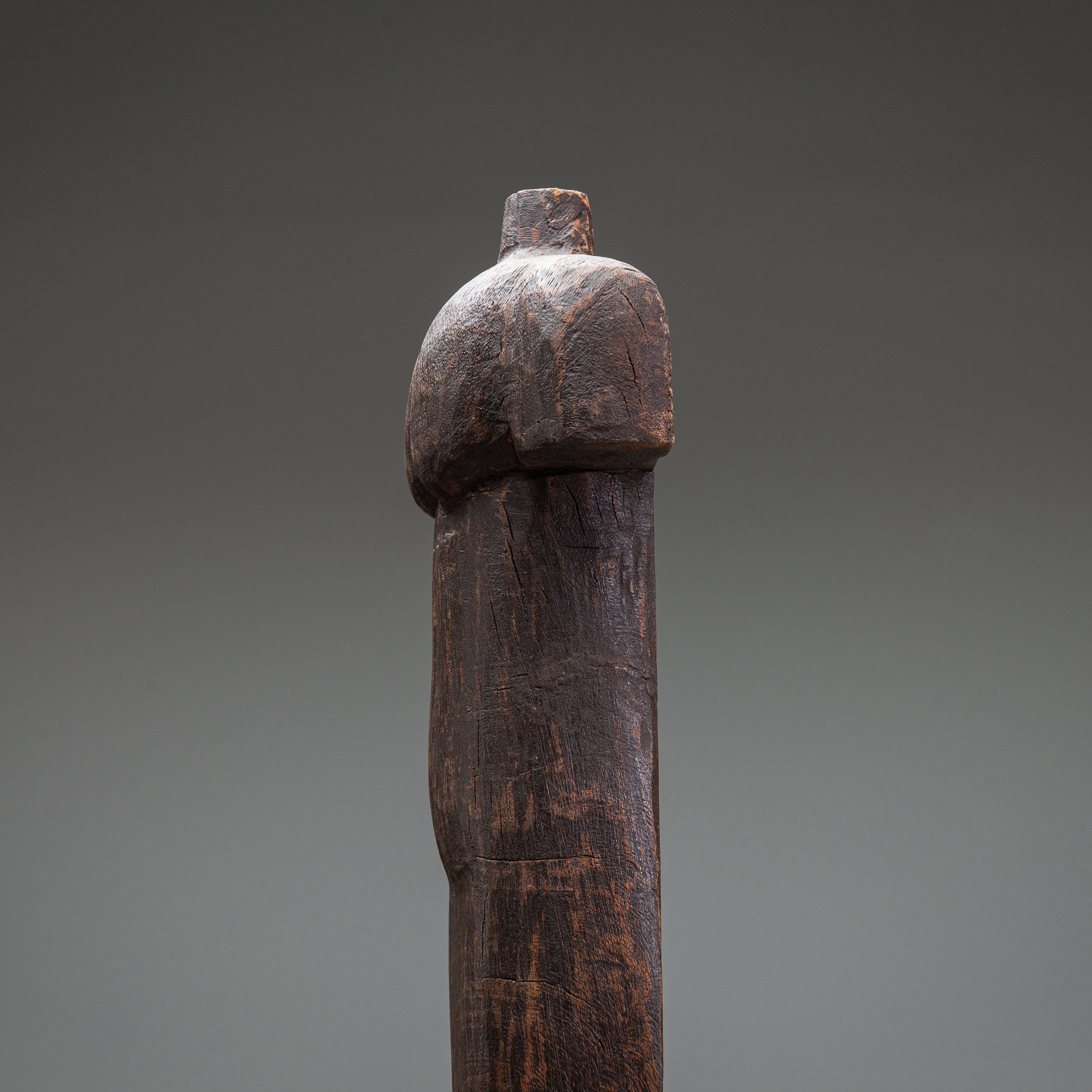 Image 8 of 12
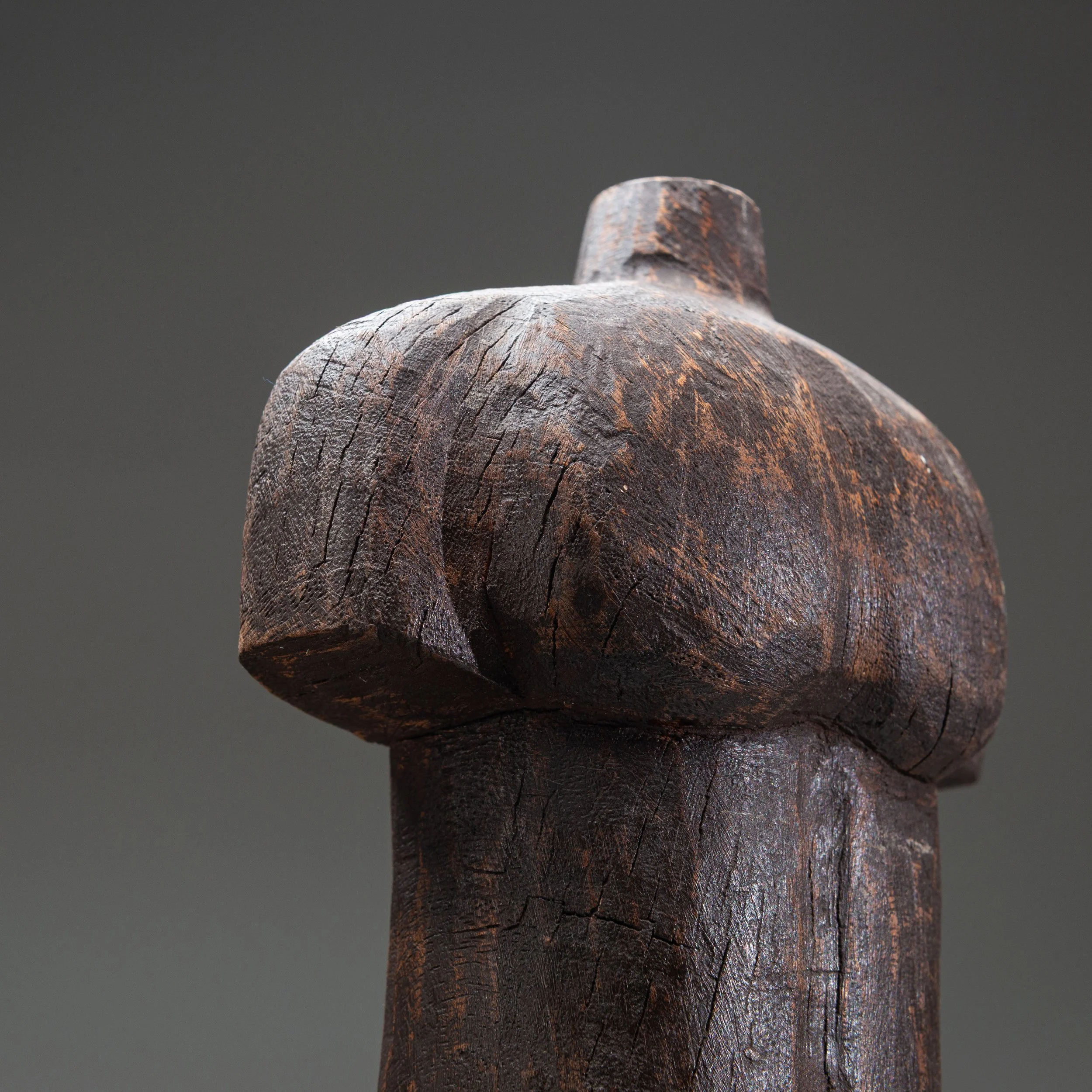 Image 9 of 12
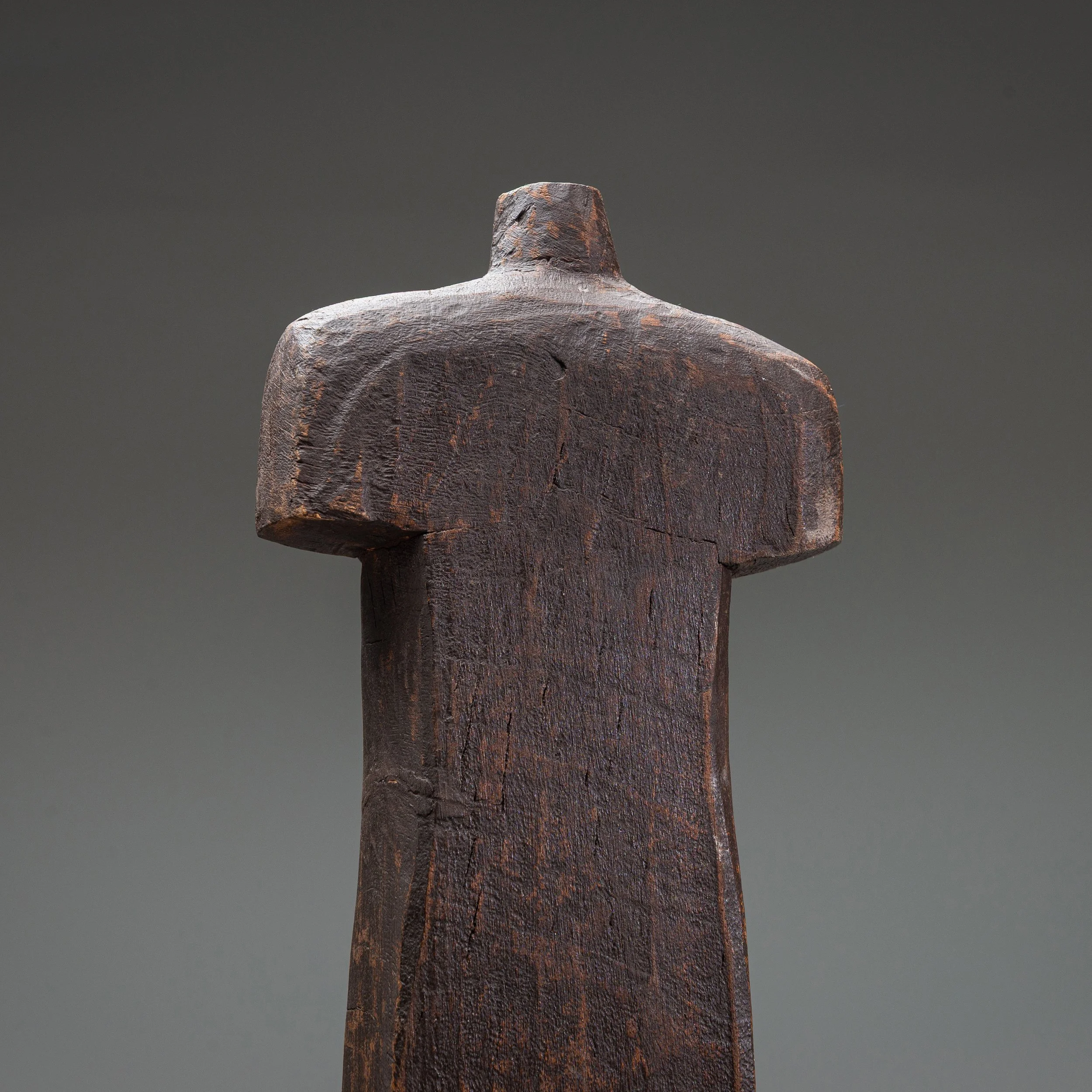 Image 10 of 12
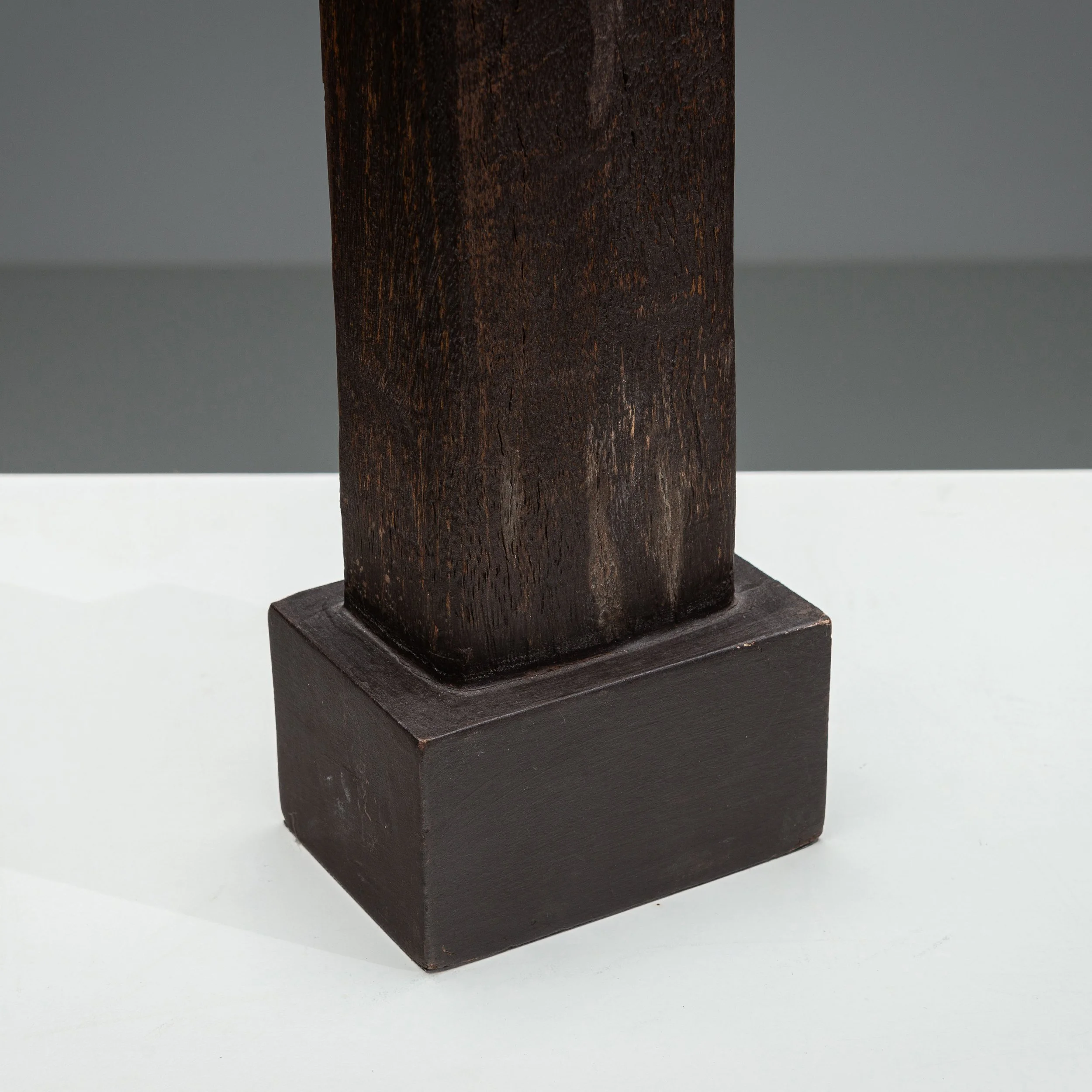 Image 11 of 12
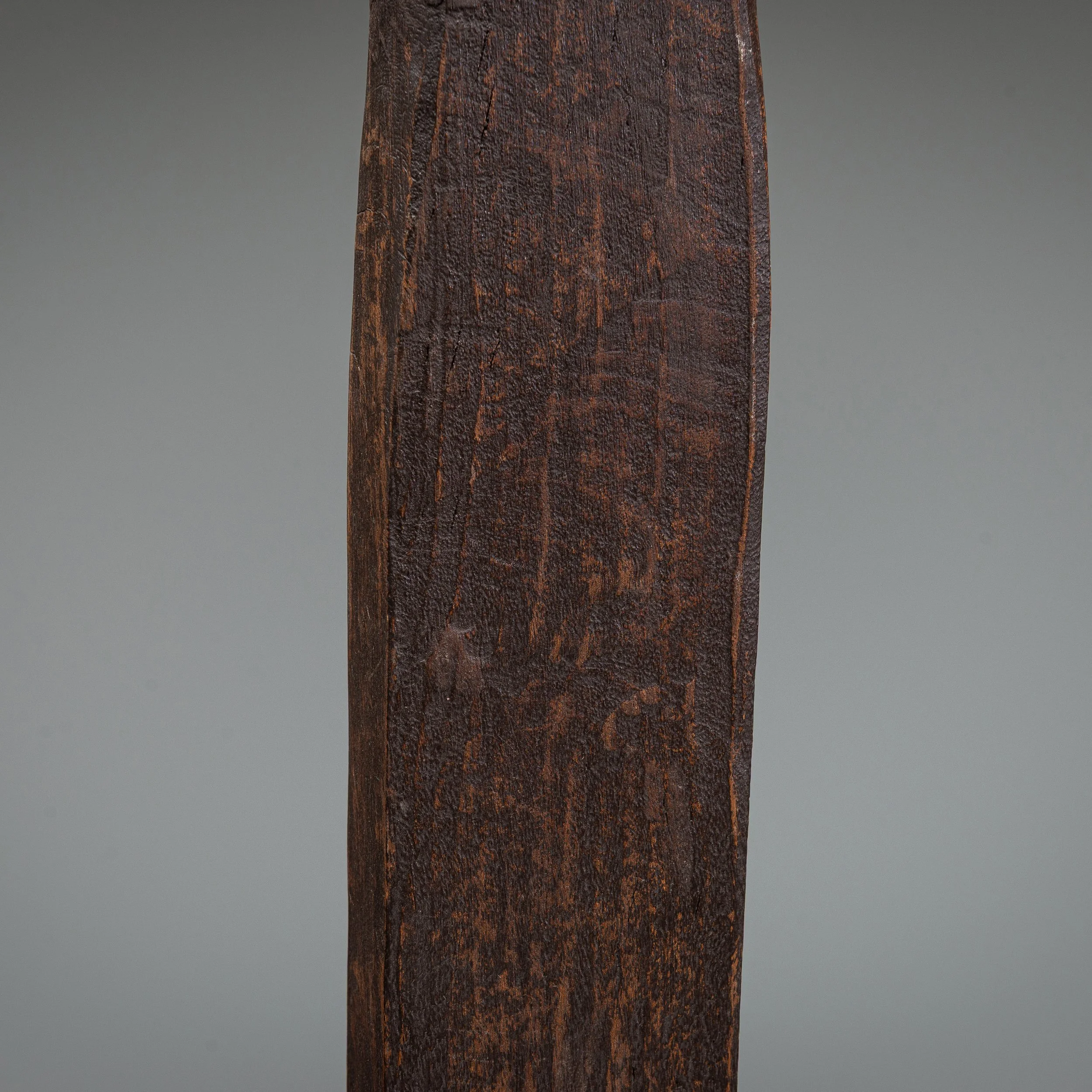 Image 12 of 12